
Key takeaways
- Start with your arch type. Wet your foot and stand on cardboard: a full print means flat feet and a need for stability, a narrow band means high arches and a need for cushioning.
- Buying against your arch type is the usual reason a highly recommended shoe fails for a particular person.
- Try shoes on in the afternoon or after a shift, wearing the socks you actually work in. Feet swell by up to half a size during the day.
- Replace them every six to nine months of full time work. Midsole foam stops absorbing shock long before the shoe looks worn out.
- New aches in feet, shins, knees or lower back without a schedule change usually mean the shoes are finished.
- Insoles help but do not rescue a badly matched shoe. Custom orthotics should come from a podiatrist rather than a shoe store.
Nurses walk between four and eight miles a shift, mostly on polished concrete under vinyl, which has essentially no give. Then they stand still for long stretches, which is harder on the body than walking.
Shoes are the highest return purchase in nursing and the one people most often economise on. The cost of getting it wrong is not blisters. It is plantar fasciitis, knee pain, hip pain and lower back pain, and those accumulate over years.
Know your arch before you shop
This is the step almost everyone skips, and it determines which shoes will work. Asking a colleague what they wear is close to useless if your feet are shaped differently.
The wet test. Wet the sole of your foot and stand on cardboard or a paving slab. Look at the print.
- A full footprint with little inward curve means a low arch or flat foot. You most likely overpronate, meaning the foot rolls inward. You want stability or motion control shoes with firm arch support.
- A very narrow band connecting heel and forefoot means a high arch. High arches are rigid and absorb shock poorly. You want cushioning and flexibility rather than stiff support.
- A moderate curve means a neutral arch, which is the easiest to shop for.
Putting a flat footed nurse in a highly cushioned neutral shoe, or a high arched nurse in a rigid motion control shoe, produces pain within weeks. This is the most common cause of the complaint that expensive nursing shoes did not help.
What to look for
A closed toe and a closed heel. Not negotiable in a clinical setting. Sharps and body fluids both go downward. Many facilities require it in policy.
A fluid resistant upper. Leather or a coated synthetic. Mesh running shoes are comfortable and offer no protection at all against a spill, and they cannot be properly cleaned.
A slip resistant outsole. Look for a genuine slip rating rather than a marketing claim. Hospital floors get wet.
Real cushioning under the heel and forefoot, because you are absorbing impact on an unforgiving surface all day.
A firm heel counter. Squeeze the back of the shoe. If it collapses easily it will not control your heel, and heel control is most of what prevents overpronation.
Appropriate weight. A heavy shoe costs you real energy over eight miles. A very light shoe usually gives up support to get there.
Clogs, trainers or specialist nursing shoes
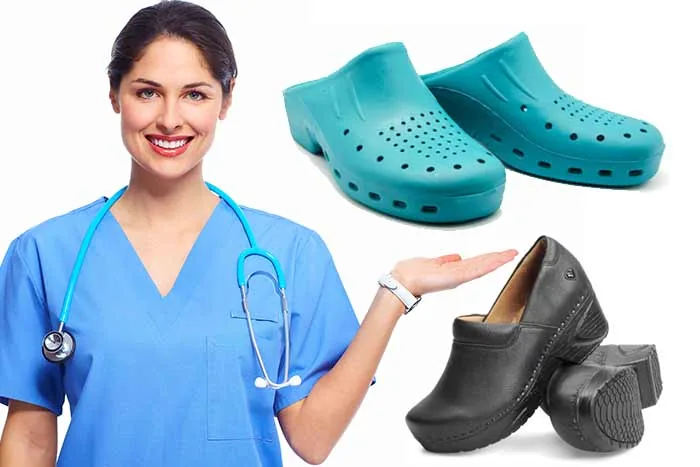
Clogs are easy on and off, easy to wipe clean, and often have excellent arch support. The open back on some models offers less heel control and can be a trip hazard on stairs. Suits nurses who stand more than they sprint.
Running or walking trainers give the best cushioning and the widest range of arch specific options, which matters most if you have an unusual foot. The trade offs are protection and cleanability, so look for models with a coated or leather upper rather than open mesh.
Purpose built nursing shoes combine fluid resistance, slip resistance and support, and are usually the right default. The range of arch options is narrower than in running shoes.
There is no correct category. A nurse with high arches on a busy medical floor and a nurse with flat feet in a static operating room want different things.
Fitting them properly
Shop in the afternoon or after a shift. Feet swell during the day, by as much as half a size. A shoe fitted on a rested morning foot will be tight by hour eight.
Wear the socks you actually work in, including compression socks if you wear them, which change the fit noticeably.
Leave a thumb's width between your longest toe and the end. Your longest toe is not always the big one.
Fit the wider foot. Most people have two slightly different feet.
Walk on a hard floor, not carpet, and stand still for two minutes. Standing reveals problems that walking hides, which matters because standing is most of the job.
Do not expect a break in period. Shoes that hurt in the shop hurt on the ward. That advice applies to leather boots, not to clinical footwear.
Replace them sooner than you think
Midsole foam compresses and stops absorbing shock long before the shoe looks worn out. This is the second most common mistake after ignoring arch type.
For full time work, expect six to nine months. Look at the outsole tread and the midsole for compression lines rather than at the upper, which usually still looks fine.
The reliable signal is your body. New aches in the feet, shins, knees or lower back that appear without any change in your schedule usually mean the shoes are finished.
Two pairs alternated daily last considerably longer than one pair worn every shift, because the foam needs a full day to decompress. Two pairs rotated will typically outlast three worn consecutively.
Insoles
Aftermarket insoles are worth trying and they are not a substitute for the right shoe. A good supportive insole in a shoe with a collapsed heel counter fixes very little.
Custom orthotics are genuinely warranted for significant biomechanical problems, diabetic foot care and stubborn plantar fasciitis, and they need a podiatrist rather than a shop scanner. If you already have heel pain, read our note on plantar fasciitis before buying anything.
The short version
Work out your arch type first. Buy for that rather than for a brand a colleague recommended. Fit them at the end of the day in your working socks. Replace them every six to nine months, and rotate two pairs if you can. Spend the money, because feet are not replaceable and shoes are.
Footwear also turns up on almost every list of gifts for nurses, usually as the one thing people are glad to receive and reluctant to buy for themselves.
Once you know what you are looking for, our roundup of the best shoes for nurses sorts specific models by the problem each one solves, from flat feet to units where fluids land on your feet.
Common questions
How do I know what kind of nursing shoe I need?
Start with your arch. Wet your foot and stand on cardboard: a full print suggests flat feet and a need for stability, a narrow band suggests high arches and a need for cushioning. Buying against the wrong arch type is the usual reason expensive shoes do not help.
How often should nurses replace their shoes?
Every six to nine months of full time work. Midsole foam stops absorbing shock long before the shoe looks worn. New aches in feet, shins, knees or lower back without a schedule change usually mean they are finished.
Are clogs or trainers better for nursing?
Neither is universally better. Clogs are easy to clean and often well supported, and suit standing more than moving. Trainers cushion better and come in more arch specific options, but need a coated or leather upper for fluid protection.
When should I try shoes on?
Afternoon or after a shift, wearing the socks you actually work in including compression. Feet swell by up to half a size during the day, so a morning fitting produces a shoe that is tight by hour eight.
Do insoles help?
They can, but they do not rescue a badly matched shoe. Custom orthotics are worth it for genuine biomechanical problems, diabetic foot care or persistent plantar fasciitis, and should come from a podiatrist rather than a shop scanner.
PNG Solutions is a healthcare staffing agency in Atlanta placing nurses and allied health professionals nationwide. If you want to talk to a recruiter, call 470 713 0689 or send us a note.